
Peaks that are hard to roster
Friday and Saturday nights, big games on the screen and members' nights pack much of the week's trade into a few hours that are hard to staff.
Robotx supplies and deploys service, delivery and cleaning robots for restaurants, pubs, clubs and function venues across New Zealand, from city bistros to RSAs and sports clubs, so your floor staff can stay with customers and members.

Friday and Saturday nights, big games on the screen and members' nights pack much of the week's trade into a few hours that are hard to staff.
In large club bistros, multi-level venues and pubs with a deck or beer garden, much of each shift goes on carrying plates out and dirty crockery back.
Weddings, birthdays, conferences and club prizegivings need many tables plated at once, and casual surge staff are costly and often arranged at short notice.
Bistro floors, foyers and bar areas need cleaning late at night or before opening, when cleaners are hardest to find.
A robot carries mains from the pass to the table, so the server keeps working the section instead of walking back to the kitchen.
Service & Delivery RoboticsStaff load dirty plates and glassware onto a robot, which takes them back to the dishwash area while the team resets tables.
Service & Delivery RoboticsRobots shuttle loaded trays from the kitchen door to service stations, so wait staff can place plates on time across a full function room.
Service & Delivery RoboticsRobots carry drinks to distant lounges and decks, while host responsibility and decisions about service stay with your duty manager and bar staff.
Service & Delivery RoboticsAutonomous scrubbers and vacuums clean bistro floors and foyers after close, while cleaners handle toilets, bar tops and detail work.
Autonomous CleaningA reception robot welcomes members and guests, reminds visitors to sign in where club rules require it, and points them to the bistro or function room.
Reception & Wayfinding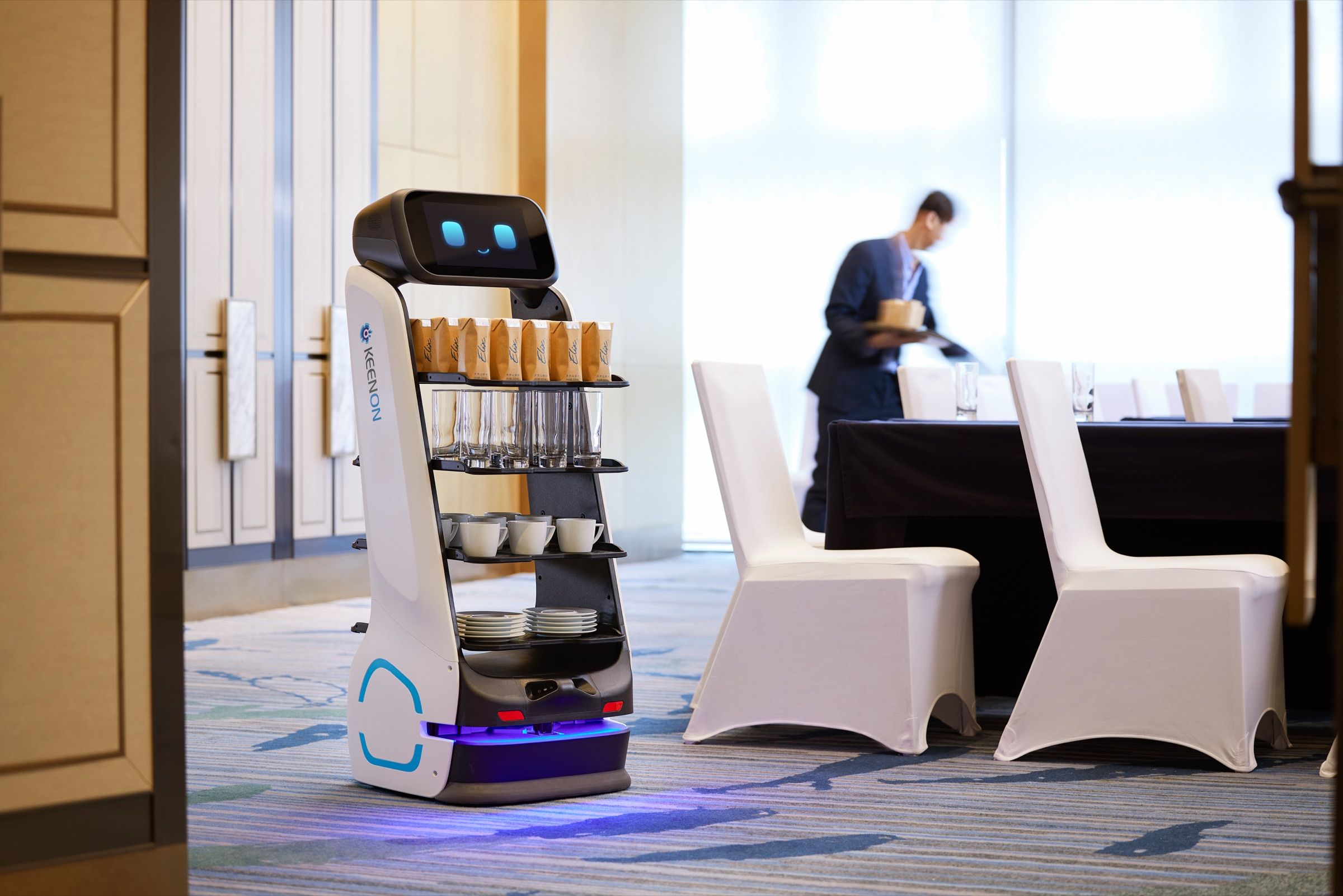
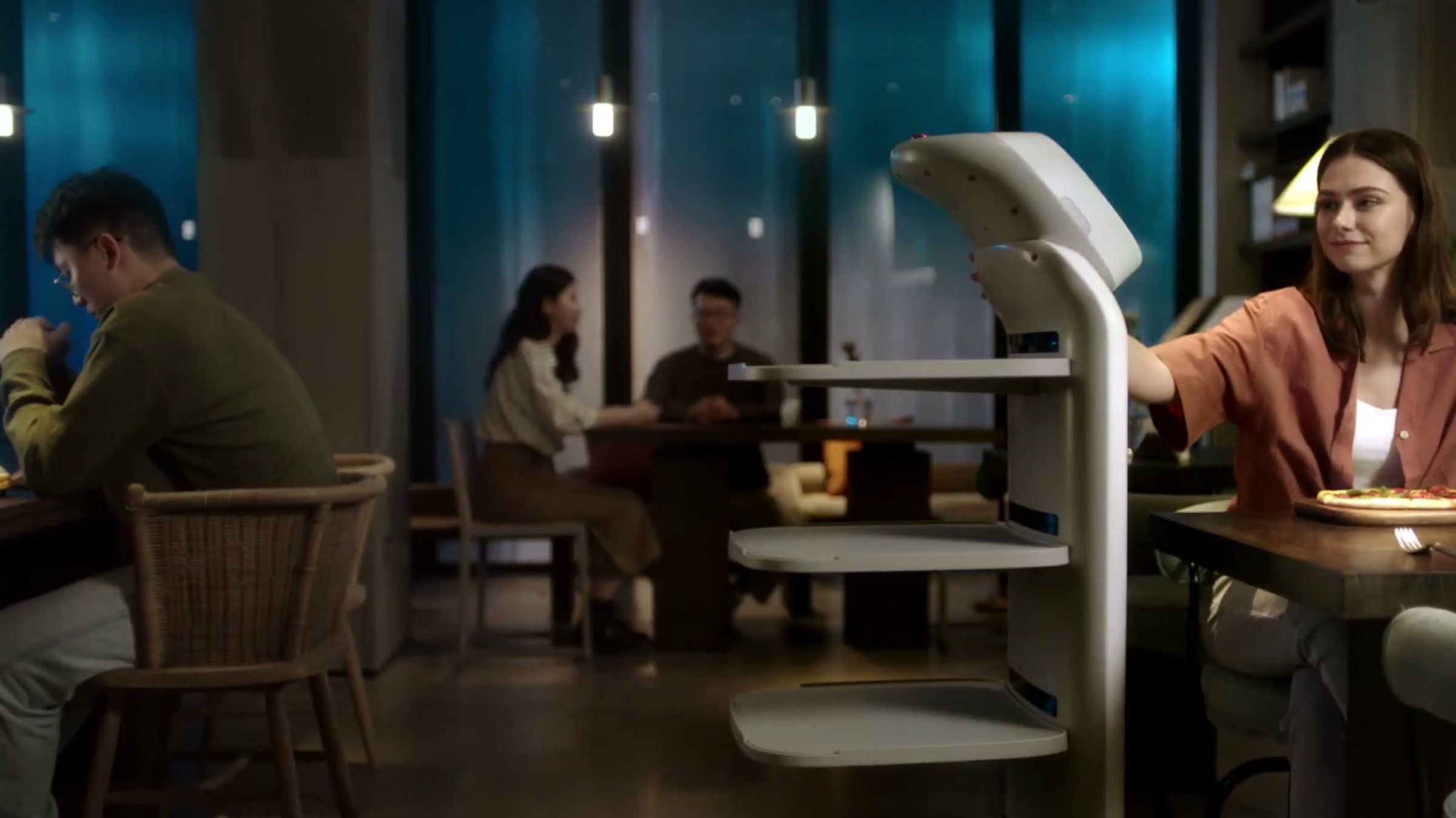
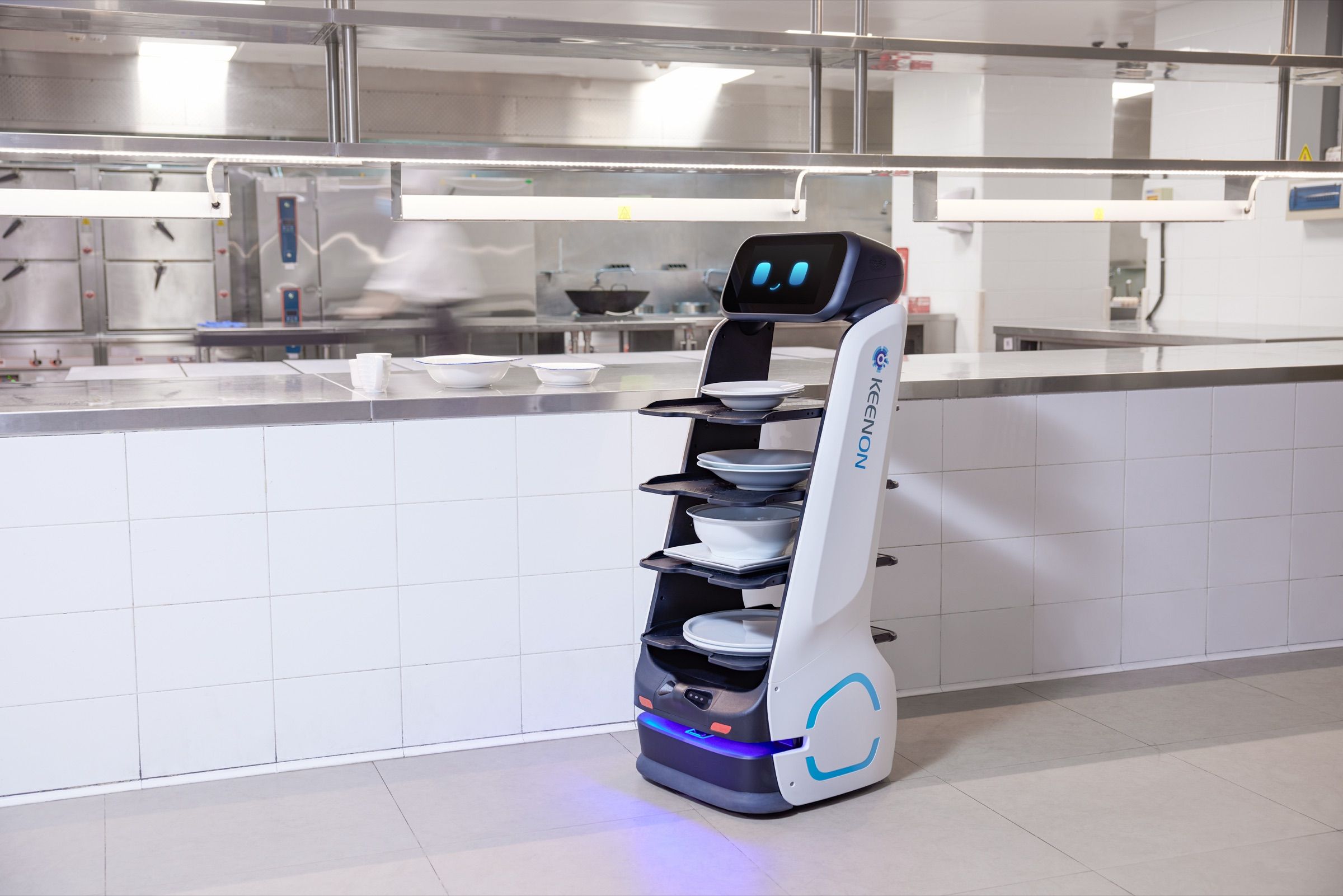
Robots fit best where staff do the most walking. In most venues, what wears floor staff out is the long trip from the pass to the far side of the bistro and back again with an armful of dirty plates. A delivery robot can take that trip. Staff load it, send it to a table number, and meet it there to serve. Tray return works the same way in reverse.
Chartered and cosmopolitan clubs, RSAs, sports clubs and large pubs tend to get the most from this because of their size. The bistro is often big, the function room may be down a corridor or up a level, and the deck or beer garden can be a long way from the kitchen. A small city restaurant with tight tables and a short pass may get less from a delivery robot and more from an autonomous cleaner that handles the floors after close.
A robot changes who carries the tray. It does not change who is responsible. Under the Sale and Supply of Alcohol Act 2012, host responsibility sits with the licensee and the duty manager on shift. A robot can take a round of drinks to the deck, but it cannot check ID, judge intoxication or decide whether to serve, so we plan drinks runs with a staff member at the table end.
Food safety works the same way. Robot trays become part of the cleaning routines in your food control plan under the Food Act 2014, alongside other serving equipment. Under the Health and Safety at Work Act 2015, your venue also needs to manage the risks robots bring to staff and customers. We set routes and speeds with that in mind, talk with the staff who will work alongside the robots, and train your team in the venue rather than in a classroom.
We begin with a conversation about your venues, then walk the floor, ideally during a busy service. We trace the routes, check Wi-Fi coverage, floor surfaces, thresholds and any outdoor areas, and talk through your heaviest sittings and functions. Where the platform supports it, we look at integration with your ordering or paging systems. The written proposal that follows sets out the recommended equipment, deployment plan, training and support. Your floor team runs the robots, and Robotx looks after set-up, servicing and parts.
Have a question about your site? Talk to a specialist.
No. A service robot handles the carrying: plates out, dirty crockery back and drinks to the far end of the venue. Taking orders, presenting food, managing allergies, host responsibility and reading the table stay with your team. Most venues use robots so the same staff can cover more tables with less walking, and they keep the people customers and members come back for.
Yes, in most layouts. Service robots use sensors to detect people and obstacles, then slow down, stop or route around them. How well they perform depends on aisle widths, lighting, floor surfaces and how crowded the room gets at peak. We assess these on site, ideally during a busy service, and set routes and speeds to suit your floor.
Pricing depends on how many robots you need, the size and layout of the venue, and whether cleaning or reception robots are part of the mix. Robots are bought outright. After we have walked the venue, you receive a written proposal covering equipment, deployment, training and support, with a deployment plan and dates set around your trading hours so service is not disrupted.
Yes, if you treat them like any other serving equipment. Under the Food Act 2014, restaurants, cafes and bars operate under a food control plan. Robot trays and compartments that carry plated food should be added to your cleaning and checking routines. We pass on the manufacturer's cleaning guidance so you can update your plan, and your food safety lead decides what it says.
Yes. Maps and table points can be updated when a room is reset for a wedding, conference or prizegiving, and venues often keep several saved layouts. We walk your common room set-ups during scoping and train your staff to adjust delivery points themselves, so you are not waiting on us before each event.
Your team takes it out of service and carries on manually, the same as they would today. We train staff on basic troubleshooting during handover. Beyond that first line, Robotx handles technical support, servicing, parts and warranty claims, and support arrangements are discussed during scoping so your duty managers know who to contact and what happens next.
A Robotx consultation starts with your sites, tasks and constraints. We’ll tell you where robotics fits and where it doesn’t, and what a sensible first deployment would look like.